
Bulging discs. Herniated discs. Protruding discs. Similar words, different implications, and far too often, they get tossed around as if they mean the exact same thing. They do not. That confusion creates problems from the very beginning. A patient reads one term on an MRI report, hears another in conversation, then finds five more online. Suddenly the condition feels murky, the cause feels uncertain, and the next step feels even less clear.
That is why understanding the terminology matters. The language surrounding disc injuries is not just technical. It shapes diagnosis, expectations, and treatment decisions. Guidance from the North American Spine Society, the American Society of Spine Radiology, and the American Society of Neuroradiology helps bring needed clarity to a topic that is often explained badly.
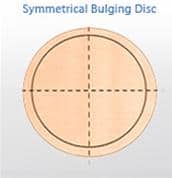
The phrase “bulging disc” is descriptive, not definitive. It tells you how the disc appears. It does not, by itself, explain everything that matters.
A disc bulge refers to disc tissue extending beyond its usual boundary. In a perfectly symmetrical bulge, the disc pushes outward along a broad portion of its circumference. That image sounds common. It is not. In actual imaging, broad-based herniations and focal herniations are often seen more frequently.
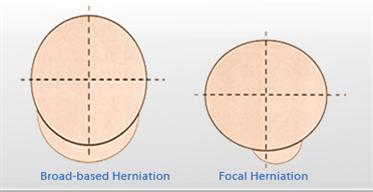
A broad-based herniation usually involves around 25% to 50% of the disc’s circumference. A focal herniation is tighter, more concentrated, typically less than 25%. Different wording, different shape, different clinical meaning. Yet one thing often remains true. Trouble begins when disc material starts irritating or compressing nearby nerve structures.
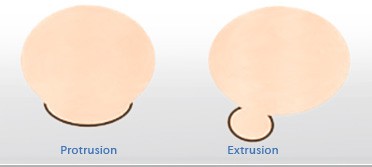
That is when symptoms speak up. Pain may stab. It may burn. It may ache. Tingling may creep in. Numbness may show up. Weakness may follow. In some patients, symptoms stay local. In others, they travel into the buttock, hip, thigh, calf, foot, shoulders, arms, or hands and create a completely different kind of daily struggle.
No two bulging discs tell the same story.
One person wakes with stiffness and shrugs it off. Another bends once and feels a bolt of pain. Someone else notices a deep, dragging ache into the leg. Another feels buzzing, burning, or a strange sense that the limb does not fully belong to them. The differences are not random.
Location changes everything. Direction matters. The degree of inflammation matters. The tissue involved matters. A modest disc issue in the wrong place can create chaos. A larger one in a quieter area may create surprisingly little pain. That is why MRI language alone never tells the whole story.
Sometimes the problem begins before a dramatic herniation ever appears.
The annulus fibrosis, the outer ring of the disc, can become injured through trauma, repetitive strain, wear, or sudden force. This outer layer contains nerve fibers. That detail matters. When the inner disc material begins to migrate through weakened layers, pain can emerge early and sharply, even when imaging does not yet show a massive defect.
This process is often referred to as internal disc disruption. It can be difficult to identify clearly on MRI or CT scans. That does not make it minor. It does not make it imaginary. It means the injury may exist in a stage that imaging does not always capture perfectly.
And that is exactly why early treatment deserves real attention. Once disc tissue begins breaking down, waiting without a plan can allow the condition to deepen, linger, or spread into a larger functional problem.
Pain lies. Or at least it misdirects.
The area that hurts is not always the area causing the problem. A bulging disc may produce local pain, yes, but it can also trigger muscle guarding, postural changes, compensation patterns, nerve irritation, and referred symptoms that send the whole clinical picture sideways. What feels like hip pain may not be a hip problem. What feels like knee trouble may begin in the spine. What feels like isolated leg pain may be rooted in a damaged disc.
That is why we do not believe in assumptions. We believe in careful evaluation, symptom analysis, history review, movement assessment, and imaging review when available. Precision matters. Without it, treatment becomes guesswork. With it, treatment becomes strategy.
A bulging disc can disrupt far more than comfort.
It can alter how a person bends. How they sit. How they sleep. How they stand in line, drive a car, carry groceries, work through the day, or get through the night. At first, the changes may seem manageable. Annoying, but manageable. Then the body starts reorganizing around the pain.
Some patients notice symptoms only at certain times. Others feel them almost constantly. In certain cases, coughing, sneezing, twisting, stepping wrong, or simply rolling over in bed can trigger a sharp and immediate flare. When nerves are involved, the problem may expand beyond pain into tingling, numbness, weakness, or reduced confidence in movement.
That is when quality of life begins shrinking, sometimes gradually, sometimes all at once.
At ProMED Pain Rehabilitation Institute, we use an exclusive non-surgical treatment approach that may be highly effective for challenging disc disorders. We have brought together a safe and distinctive combination of advanced spine technology and specialized protocols within one comprehensive setting.
We are not interested in chasing symptoms for a few hours of temporary comfort. We aim higher than that. Our focus is on addressing the disc condition itself, reducing irritation, improving spinal function, and supporting the environment-damaged tissue needs in order to recover.
For patients searching for Bulging disc pain relief Bolingbrook, IL, that distinction is not small. It is everything. Symptom relief matters, of course. But meaningful progress usually begins when the real source of the pain is identified and addressed with intention.
We believe patients deserve more than a quick fix and more than a passive instruction to just wait it out.
Many people come to us after trying medication, physical therapy, injections, rest, or consultations that moved almost immediately toward surgery. Some were told to be patient. Some were told to stop doing what they love. Some were told the pain would simply be part of life now.
We reject that kind of resignation.
We understand the disc is living tissue. Living tissue needs support. It needs circulation. It needs the right conditions if healing is going to happen at all. Our approach is designed to help activate the disc’s natural repair capacity while reducing the stresses that keep the condition active and the pain ongoing.
This is not about hype. It is about offering a serious, individualized, conservative option for qualified patients who want to explore non-surgical care before accepting invasive procedures.
Contact our Non-Surgical Spine Center today at 630-226-5754 to see if you qualify for our innovative approach to non-surgical treatment for bulging disc pain. We serve patients throughout the Chicago area.
The best doctor to see is one who regularly evaluates spinal disc conditions, understands nerve-driven symptoms, and knows when conservative care may be the right starting point. Patients often benefit most from a provider who looks beyond the obvious pain site, studies imaging carefully, and considers non-surgical options before moving too quickly toward invasive recommendations.
Non-surgical care may include a thorough evaluation, targeted rehabilitation, advanced spine-focused technology, activity modification, and a treatment plan tailored to the patient’s history and symptoms. The aim is to reduce irritation, improve support to damaged tissues, restore function, and give the body an opportunity to heal without defaulting to surgery first.
Walking is often useful because it can help maintain mobility and reduce stiffness. That said, not every patient responds in the same way. Short, controlled walking may feel beneficial, while longer distances or poor mechanics may aggravate symptoms. The right amount depends on how the body responds and what structures are involved.
Sometimes surgery is appropriate. Sometimes it is necessary. But it is not automatically the best first move for every patient with a bulging disc. Many people want to know whether a less invasive path exists before accepting the risks, recovery time, and expense that surgery can involve.
Surgery may be considered when there is significant or progressive neurological loss, severe weakness, loss of bowel or bladder control, or symptoms that persist despite appropriate conservative care. Those situations require prompt medical evaluation and a careful review of available options.
A bulging disc may remain stable for a time. It may also worsen gradually and progress to a herniation, extrusion, or sequestration. Left untreated, it can contribute to increasing pain, ongoing nerve irritation, weakness, mobility loss, compensatory movement patterns, and a reduced quality of life. Early evaluation can help keep a manageable condition from becoming a far more limiting one.
![Cigna_logo[1]](https://promedpainrehab.com/wp-content/uploads/2026/02/Cigna_logo1.1904040828518.jpg)






Specializing in a new, cutting edge non-surgical spinal disc treatment

The cost is significantly less than surgery

Get FDA cleared, state of the art treatment

We tailor your treatment based on your health history

We’ll address your specific conditions & individual needs
Back or neck pain rarely takes over life in one dramatic moment. More often, it advances quietly. Sleep changes first. Then posture. Then driving. Then work. Then exercise. Then the small, ordinary movements that once required no thought at all. What began as discomfort starts becoming a limit.
We do not believe that should be accepted without a fight.
At ProMED Pain Rehabilitation Institute, we are committed to helping patients explore a more focused, more thoughtful, and more strategic non-surgical path. We work to identify the real cause of pain, determine whether our approach is the right fit, and guide each patient with clarity, honesty, and purpose. Whether you are comparing options for disc injury care or researching Bulging Disc Treatment Bolingbrook, IL, we are here to help you take the next step with confidence. You can also explore options for Spinal stenosis treatment Bolingbrook, IL to better understand available care for related spinal conditions.
Contact us today to schedule your comprehensive evaluation.